


Complexity Research
Harness Complexity → Achieve Sustainability
Our Complexity Research Program provides in-depth research and analysis that help decipher complexity in local human systems. Products include baseline reports, case studies, evaluation reports, needs assessment reports, policy briefs, policy papers, and research reports. Products also include early warning bulletins and monitoring briefs that monitor key indicators, patterns, and trends in local systems.
Research Topics
Transitions & Transformations
Research into the trends shaping system-level transitions and transformations

Being aware of how various trends are moving a system forward is critical for assessing the state of its transitions and transformations and strategizing the next steps.
Research Projects
2026 - The Complexity and Sustainability of California’s Energy Transformations (Work-In-Progress)
Notes On The Complexity Ahead

Timely analysis of the global drivers shaping local contexts
Sector-specific drivers of change
Likely and unlikely scenarios
Unintended consequences
$24.99 per month for 3 months
Renews automatically, unless cancelled
Knowing and understanding the trajectories of megatrends is crucial for any decision-maker seeking to make future-informed decisions in an increasingly complex world.
While it is true that the future can never be predicted, not all aspects of the future are equally unpredictable. There are relatively stable forces that play a huge role in determining outcomes.
Briefs
Updates on key impact, progress, and state indicator trends.
California’s Energy System

$12.99 per month for 3 months
Renews automatically, unless cancelled
This Monitoring Brief tracks California’s energy uses and the composition and origins of its sources.
California’s Food System

$12.99 per month for 3 months
Renews automatically, unless cancelled
This Monitoring Brief tracks the number and demographics of food-insecure persons in California (based on USDA).
Computer Simulation of Human-Forest Interaction
A forest landscape change computer simulation model with AI-based adaptive forest management
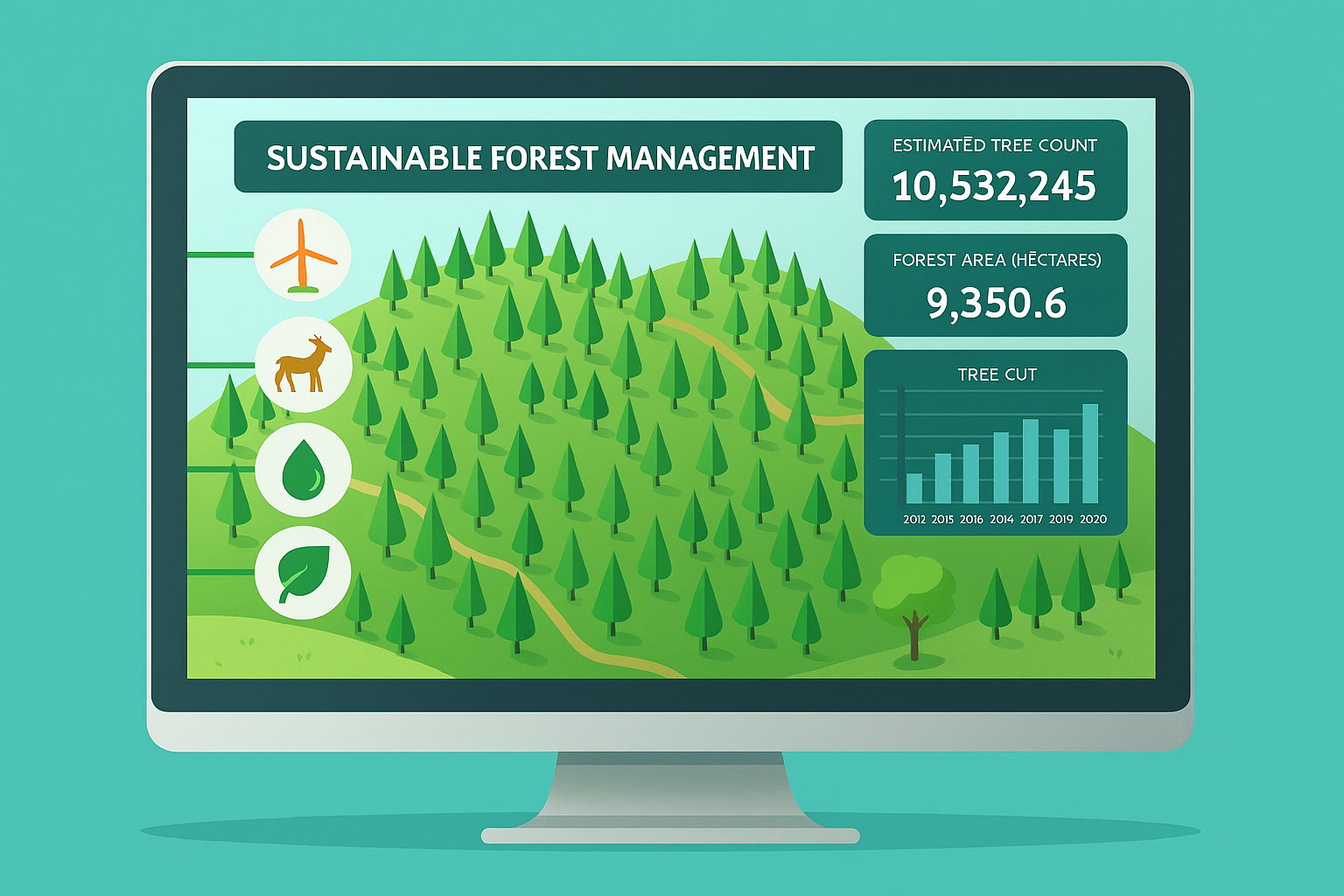
The SOSIEL (pronounced ˈsōSHəl and stands for Self-Organizing Social & Inductive Evolutionary Learning) Harvest extension (SHE) implements boundedly-rational decision-making by one or more agents.
Together, LANDIS-II and SHE have the potential to simulate adaptive management in co-evolving coupled human and forest landscapes.
Research Projects
2021 - A new agent-based model provides insight into deep uncertainty faced in simulated forest management, Landscape Ecology
2020 - The Doubly-Bounded Rationality of an Artificial Agent and its Ability to Represent the Bounded Rationality of a Human Decision-Maker in Policy-Relevant Situations, Journal of Experimental & Theoretical Artificial Intelligence
2018 - The SOSIEL Platform: Knowledge-based, cognitive, and multi-agent, Biologically Inspired Cognitive Architectures